Getting Around Jakarta: A Female Traveler’s Guide to Public Transportation
By Zunainah, Greeter in Jakarta
Jakarta is vibrant, fast-moving, and full of contrasts. As Indonesia’s largest city and one of Southeast Asia’s most dynamic capitals, navigating it for the first time can feel overwhelming, especially as a solo female traveler. But with the right guidance, using public transportation in Jakarta can be safe, affordable, and surprisingly efficient.
Zunainah, a local Greeter in Jakarta, knows the city beyond the surface and shared useful information for your time there.
"Since I can’t read minds, I play with words, for work and for fun. I love telling stories shaped by my experiences, because every journey offers its unique perspective. Writing and travelling are my way of exploring the world and discovering more about myself along the way." — Zunainah, Greeter in Jakarta
Professionally, she is a Jakarta-based content and marketing strategist with a background in journalism, advertising, and startups, bringing both local insight and clear, practical knowledge to this guide.
If you’re wondering whether public transport in Jakarta is safe for women, how reliable it is, or which option makes the most sense for your itinerary, you’re in the right place. From taxis and ride-hailing apps to TransJakarta buses, the MRT, commuter rail, and women-only carriages, this article will help you navigate the city with confidence.
Public transportation in Jakarta offers a wide range of options connecting business districts, cultural landmarks, shopping hubs, and local neighborhoods. Understanding how the system works allows you to move around like a local woman, not just a tourist.
Keep reading and find out how to get around Jakarta safely and confidently.

Photo credits: Zunainah
Going Around Jakarta with Public Transportation
Let’s get local during your visit to the former capital city of Indonesia.
Selamat datang di Jakarta. Welcome to Jakarta.
Also known as J-town or The Big Durian, Jakarta is Indonesia's largest and only megacity in Indonesia. It's more than six times the size of Paris and twice the size of Kuala Lumpur, making it massive and densely populated with a population of over 10.6 million people (Statistics Indonesia, Feb 2025).
Even though the city is huge and crowded, it's relatively easy to get around Jakarta using public transportation. Yes, it's not as structured and integrated as systems in Singapore, Japan, or South Korea. You may get confused while adjusting with the route system. Additionally, it's not always punctual due to the challenging traffic conditions, especially during peak hours or on rainy days. Still, Jakarta’s public transport has its advantages in terms of options and overall decent standards.
In fact, some foreigners from the U.S. and Europe have given positive reviews about the decent standards of cleanliness at Jakarta's commuter train stations, TransJakarta bus stops, and MRT (subway), especially when compared to transport stations in Los Angeles or Paris. So, be a little more adventurous, don’t rely on taxis all the time. Go local and try other public transportation options while you’re in the city.
Let’s break down the public transport alternatives you can use to get around the city.

Photo credits: Zunainah
Taxi
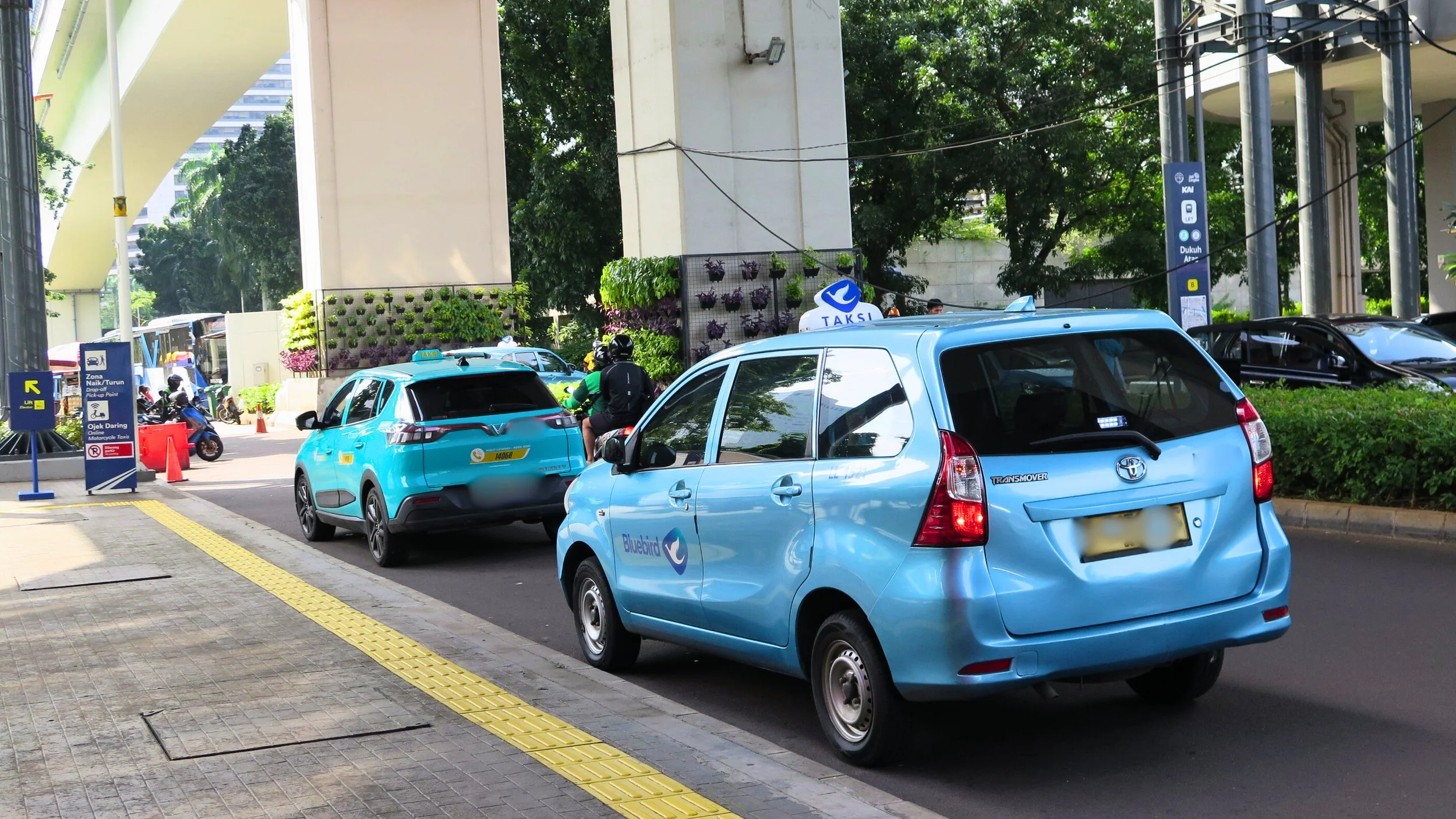
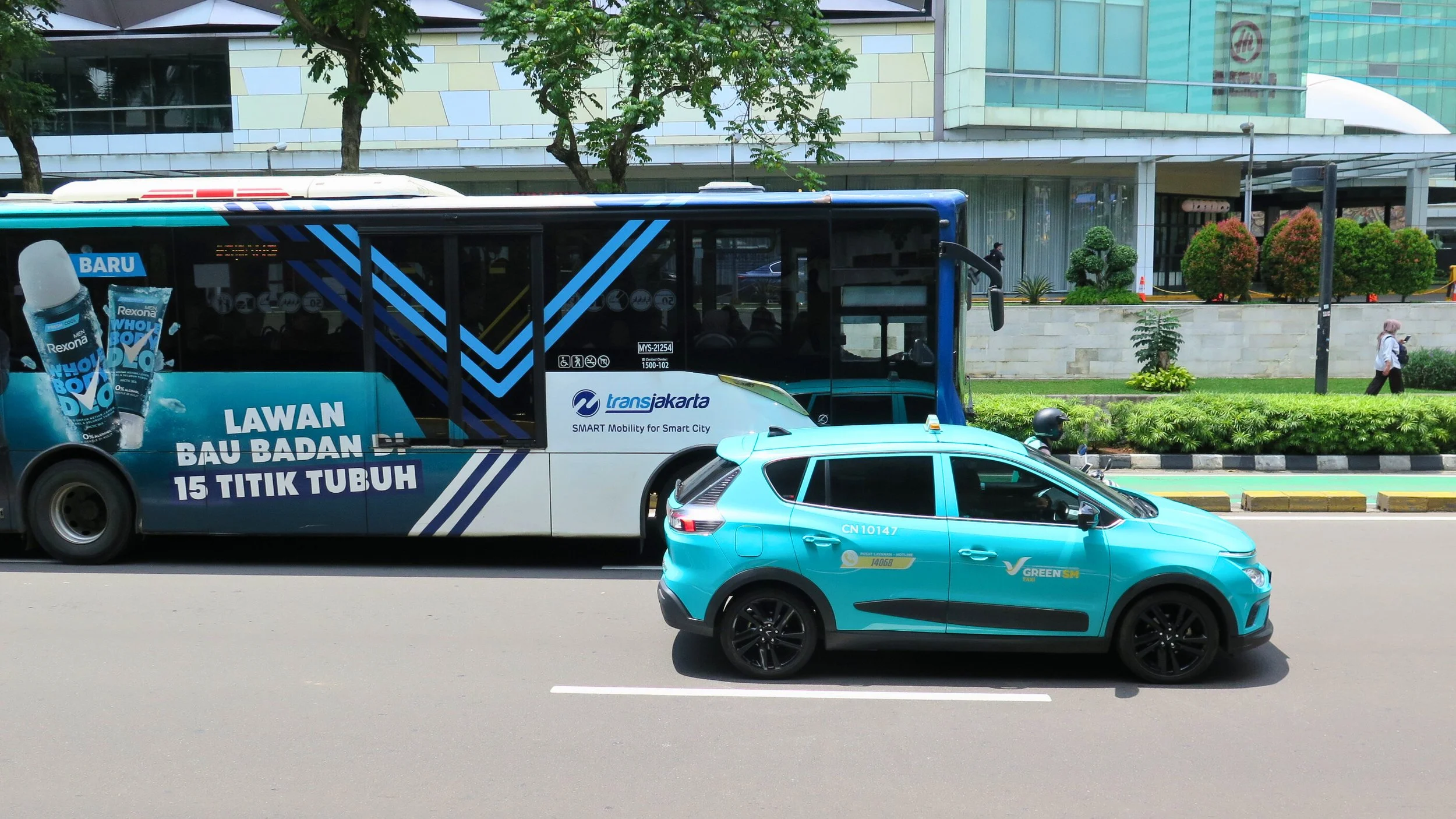
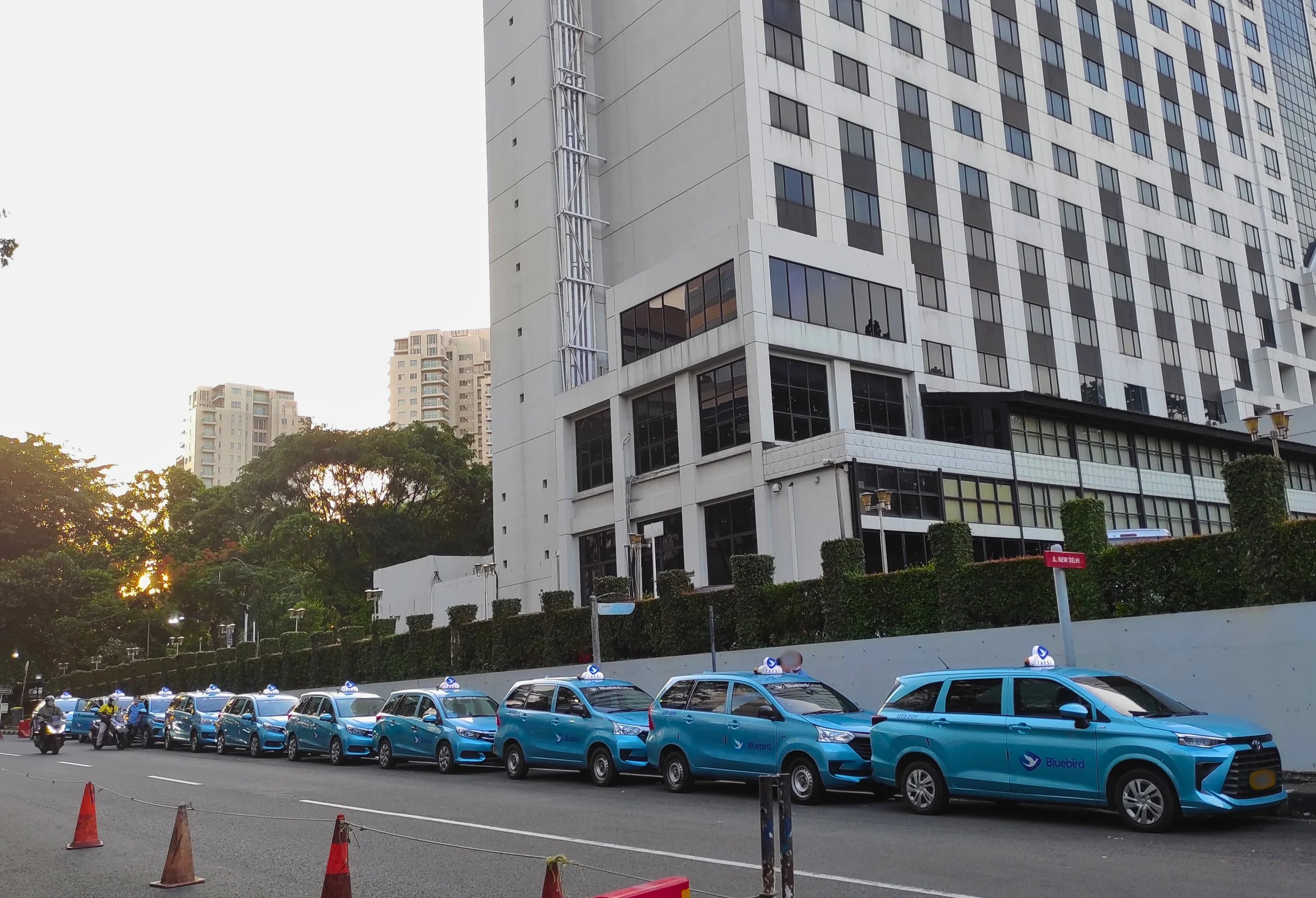
This is definitely the easiest option among public transport. You can find taxis almost everywhere—at the airport, shopping malls, hotels, hospitals, or along busy roads. The fare is higher than other transport options but still considered cheap compared to taxi fares in other Asian countries, especially Japan.
To avoid scammers, the most well-known taxi companies are Bluebird and Express. More recently, a new taxi operator, Green SM (known as Xanh SM in Vietnam), has started operating in Jakarta, though their fleet is still smaller than Bluebird’s. To get their services, you can hail a taxi on the street or order online via the taxi’s app or Gojek app.
Pros: Probably the best option if you want to go directly to your destination without the hassle of changing transport modes along the way. It’s also effective and worth the money if you’re traveling alone with large luggage(s) or in a group of 3–6 people.
Cons: More expensive than other transportation modes. Heavy traffic can quickly increase the total ride cost.
Fare: Base fare around IDR 9,000–10,000 (54-60 cents USD), with an additional IDR 5,000–6,300 (30-38 cents USD) per km, exclude tolls and parking fare. There may be extra charge for waiting time. Bluebird offers Fixed Price feature on the app for alternative. This may be beneficial for you if you ride during peak hours to anticipate the extra cost due to the traffic.
Payment methods: Most taxis allow you to pay with international credit/debit card (Mastercard/Visa/Amex/JCB) or local digital payments (QRIS, GoPay, ShopeePay, OVO, DANA). You can swipe directly after your ride or connect your payment method in the app. Cash payment is also allowed.
Ride-Hailing (Car or Bike)
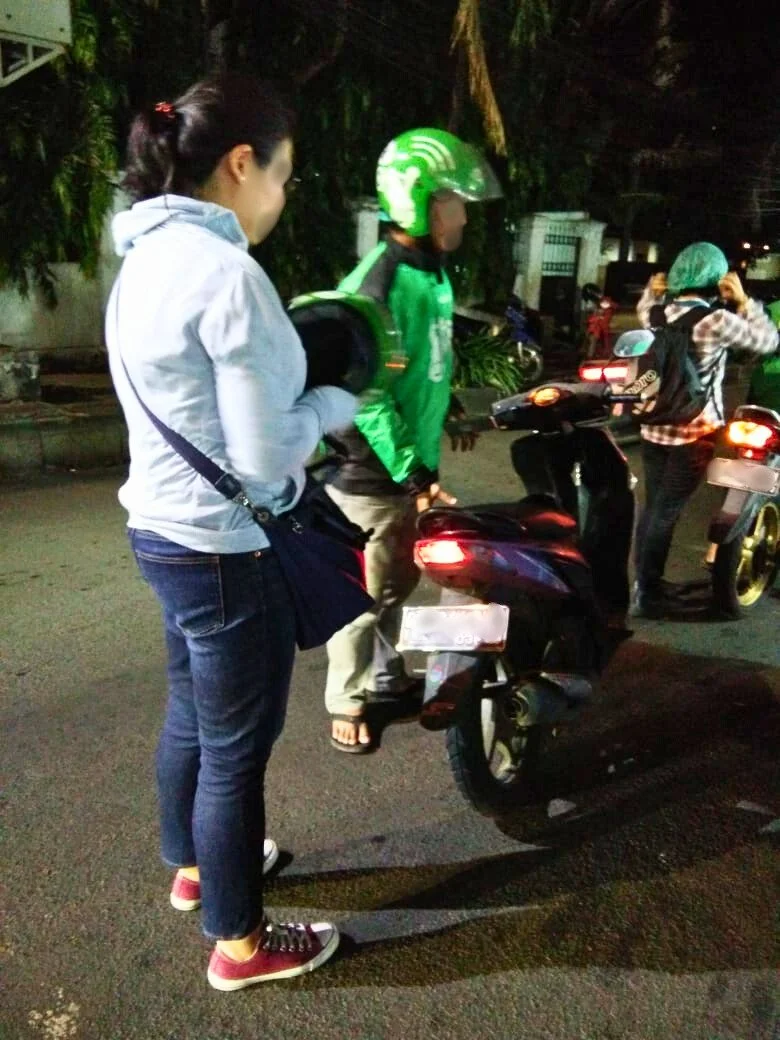
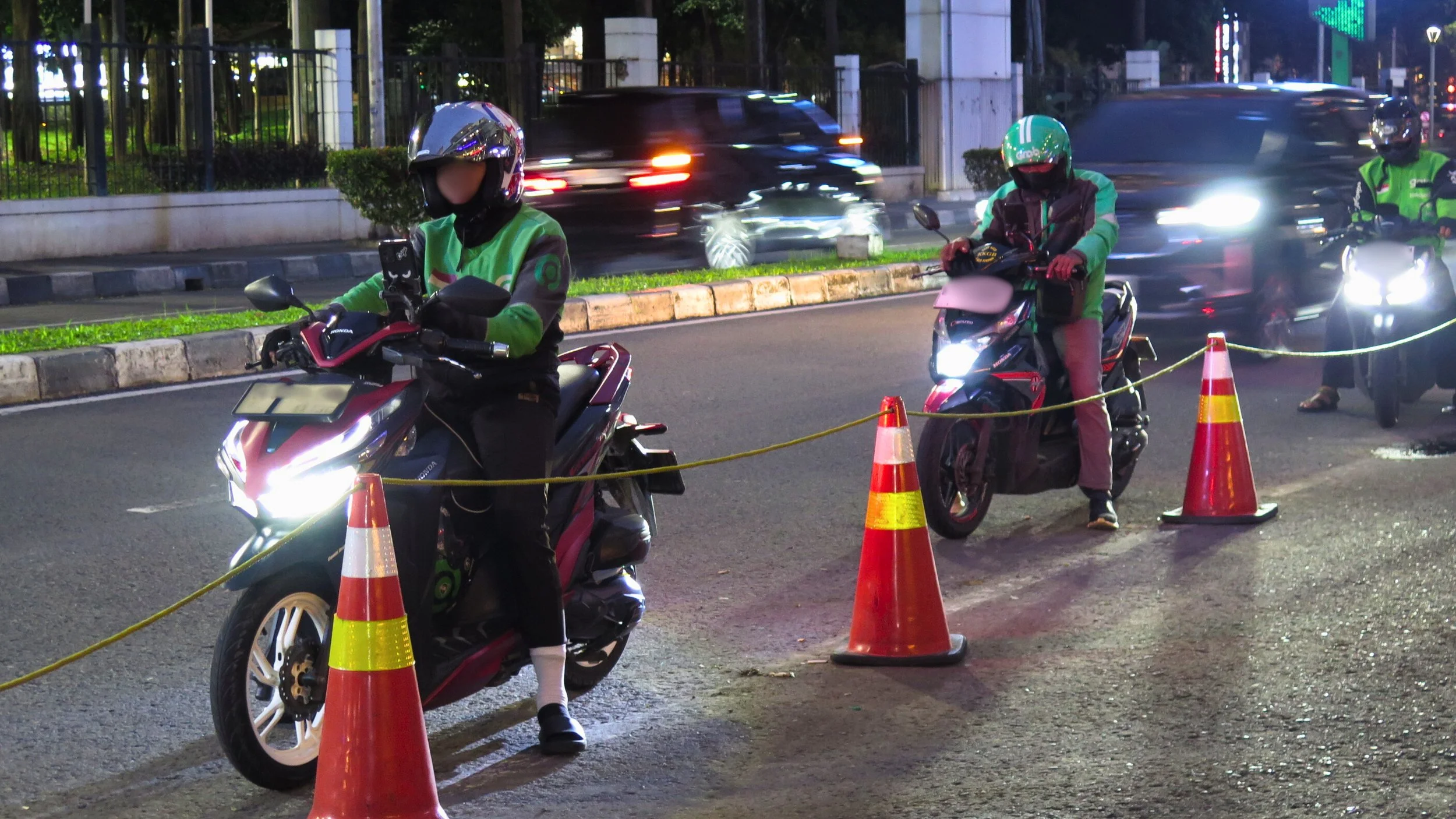
The most common ride-hailing apps in Jakarta are, of course, Gojek and Grab. Other options include Maxim and InDrive. To use these services, simply download the app of your choice, fill in the required information, and you’re good to go.
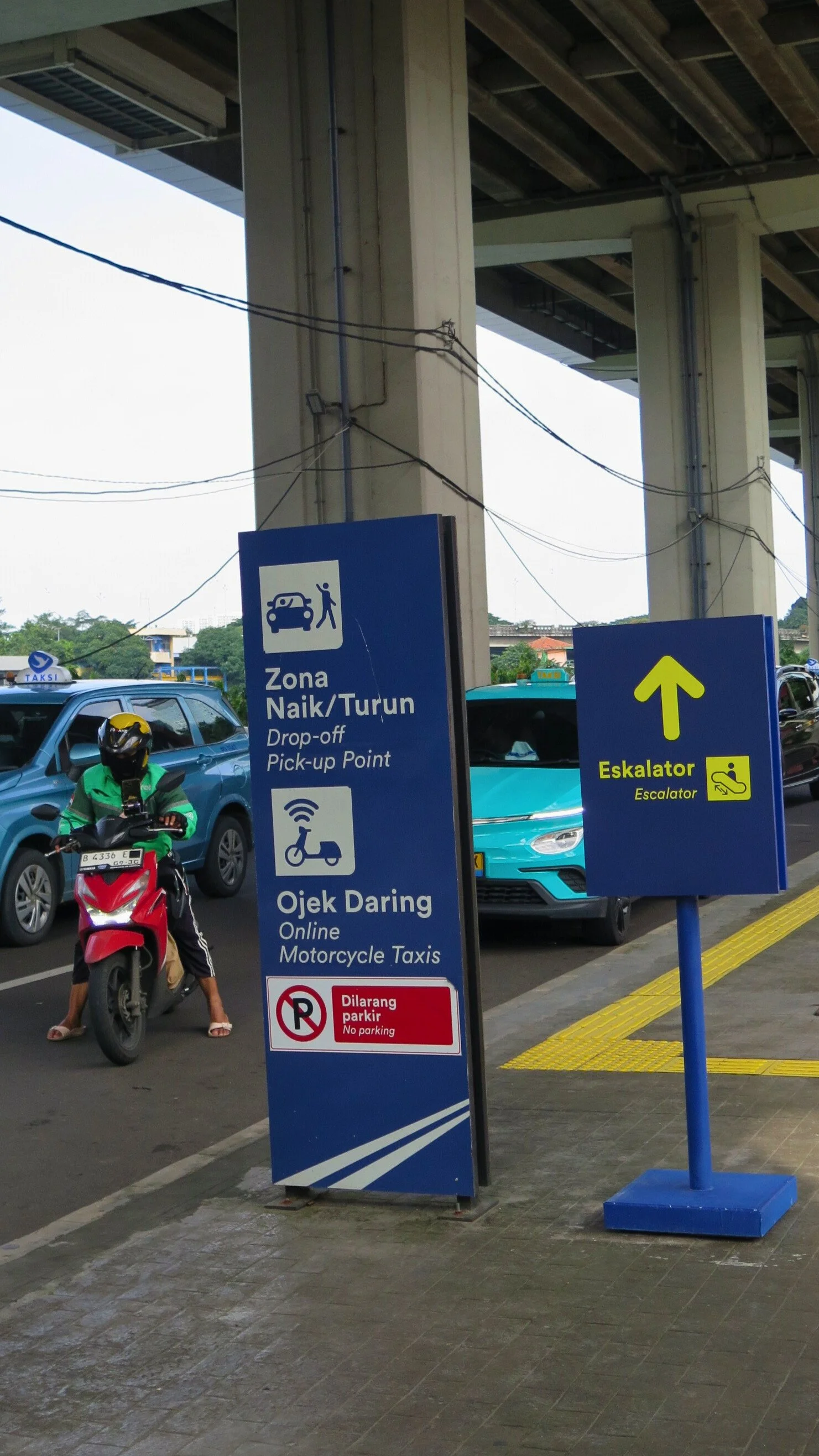
Some public places—such as airports, shopping malls, or train stations—have designated spots for Gojek/Grab pick-up and drop-off. For transport options, you can choose between car and motorcycle. If you’re carrying a lot of stuff, it’s better to take a car. But if you’re traveling light and your destination is relatively close, a motorcycle can be the fastest way to get there, especially during peak-hour traffic. Always wear a helmet when riding a motorcycle for your own safety.
Pros: Just like taxi, the ride can directly take to your destination. Ride-hailing apps offer fixed prices, so you don’t need to worry about unexpected costs. They often provide discounts and promos to lower your fare. On the app, you can also choose various service types such as regular/standard, economy/saving, priority, premium/luxury, large cars, or even electric vehicles.
Cons: Unlike taxis that follow a company standard, ride-hailing vehicles can vary in condition—some are excellent, while others are just “fairly decent.” It depends on the fleet and category you select.
To reduce traffic during peak hours, Jakarta applies the odd-even license plate system for cars only--not applied for motorbike. If your assigned car has the opposite plate number for that day, it may not be allowed on certain main roads, forcing the driver to take a longer route and adding travel time.
On rainy days, demand usually spikes, so finding a ride may be more difficult.
Fare: During peak hours (06:00–09:00 and 16:00–20:00), fares are generally higher than usual.
Payment methods: You can connect the payment method in the app with international credit/debit cards (Mastercard/Visa/JCB), local digital payments (QRIS, GoPay, ShopeePay, OVO, DANA), or pay cash directly to the driver.
TransJakarta Bus
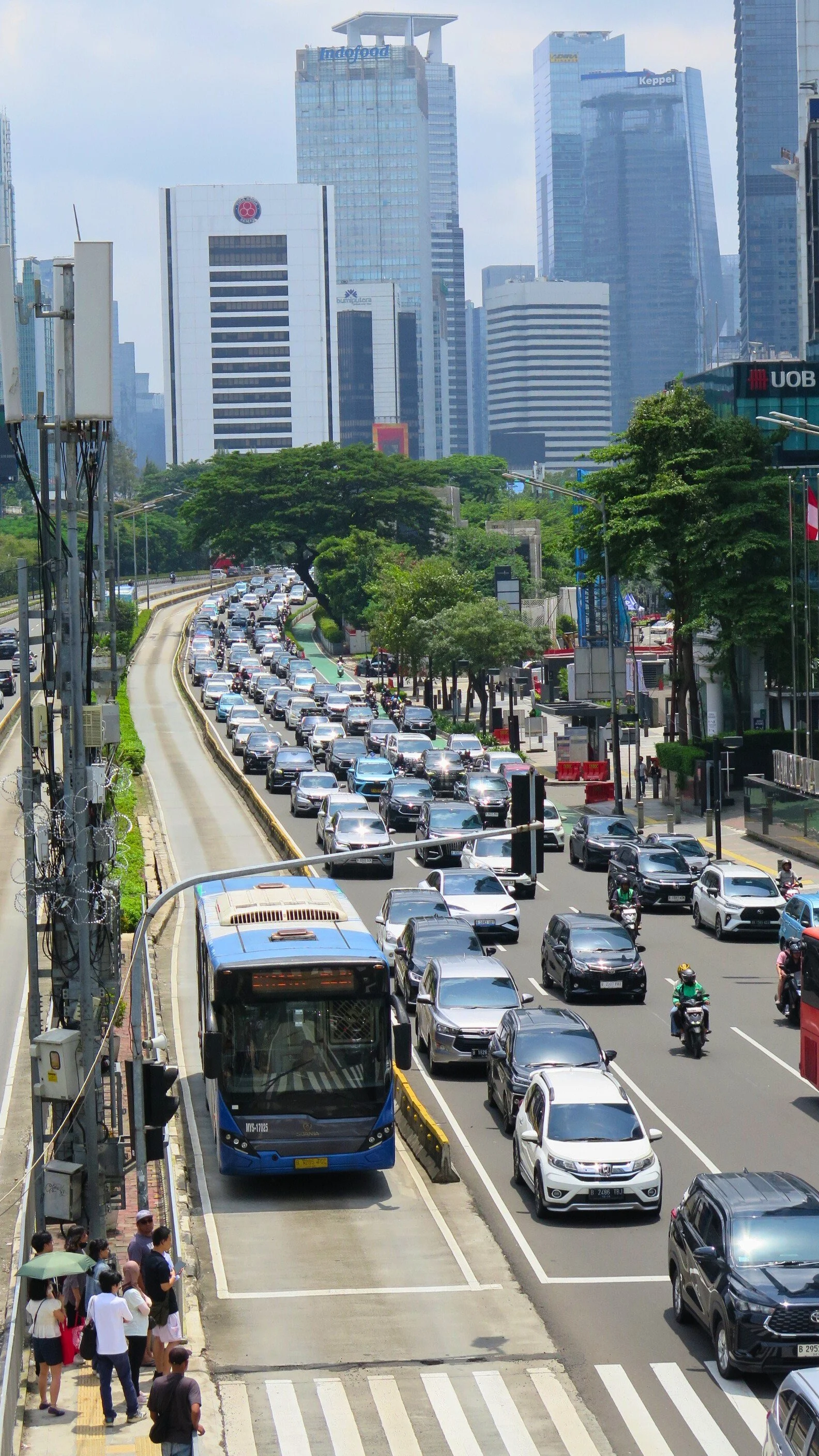
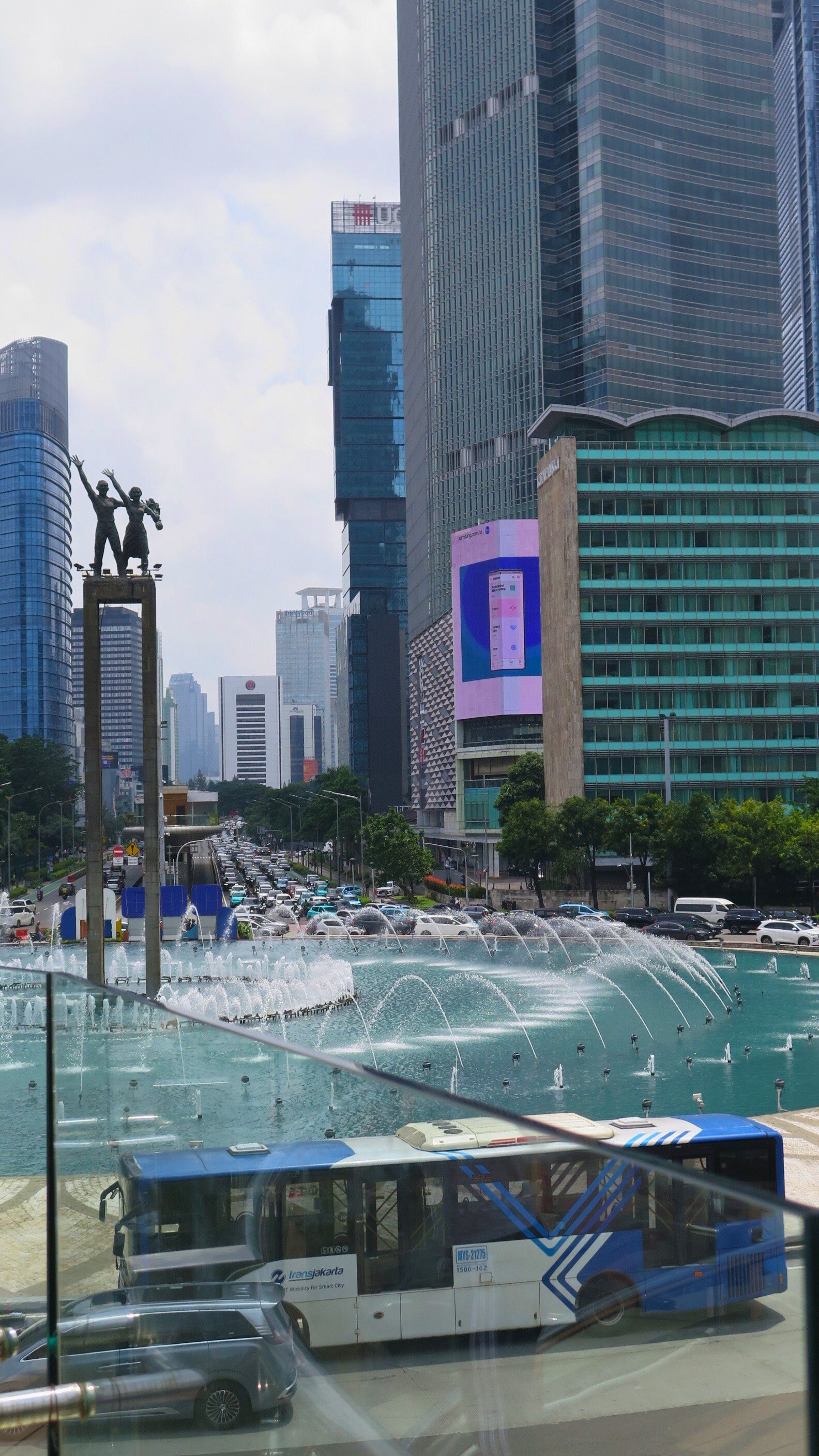
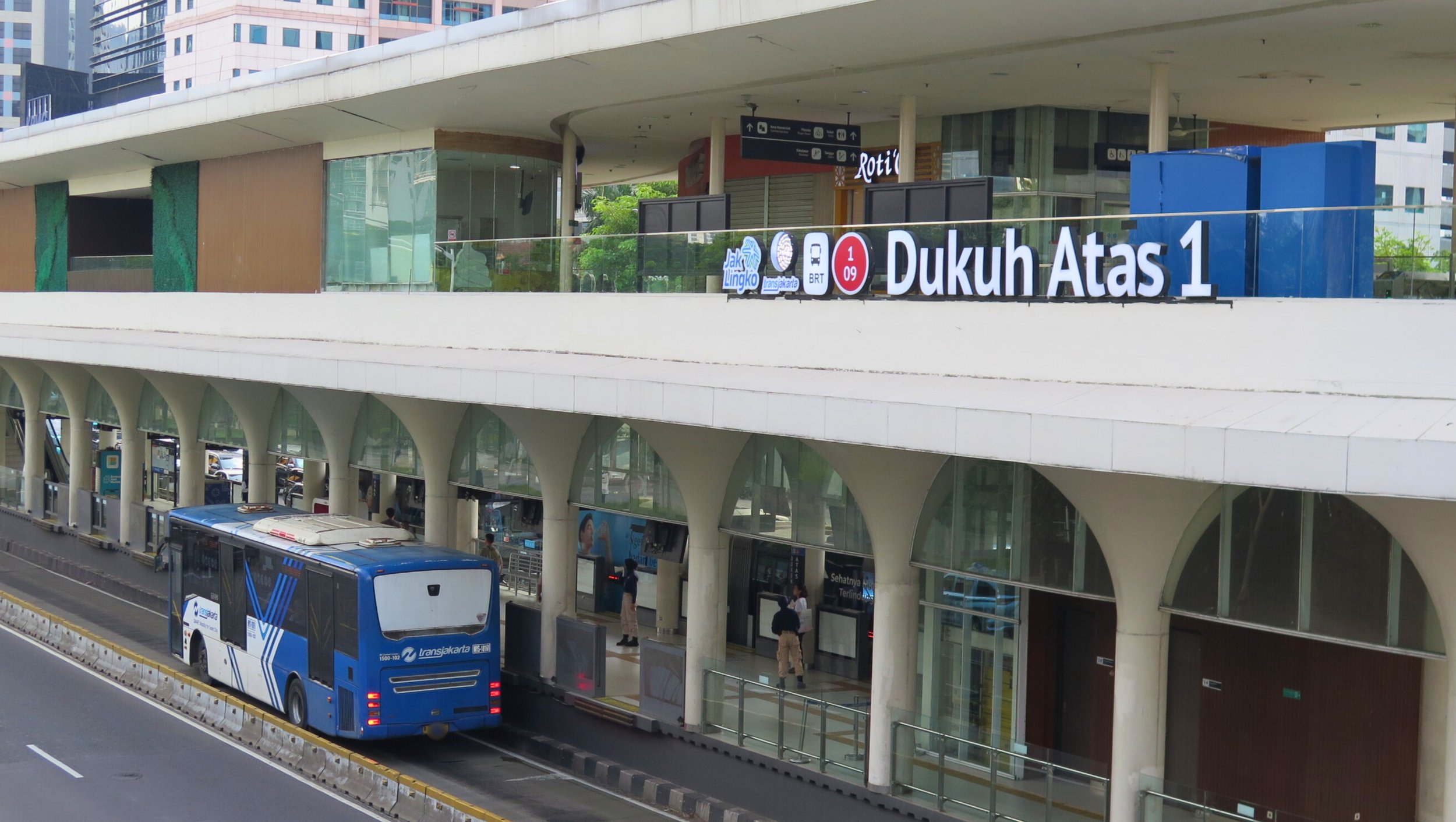
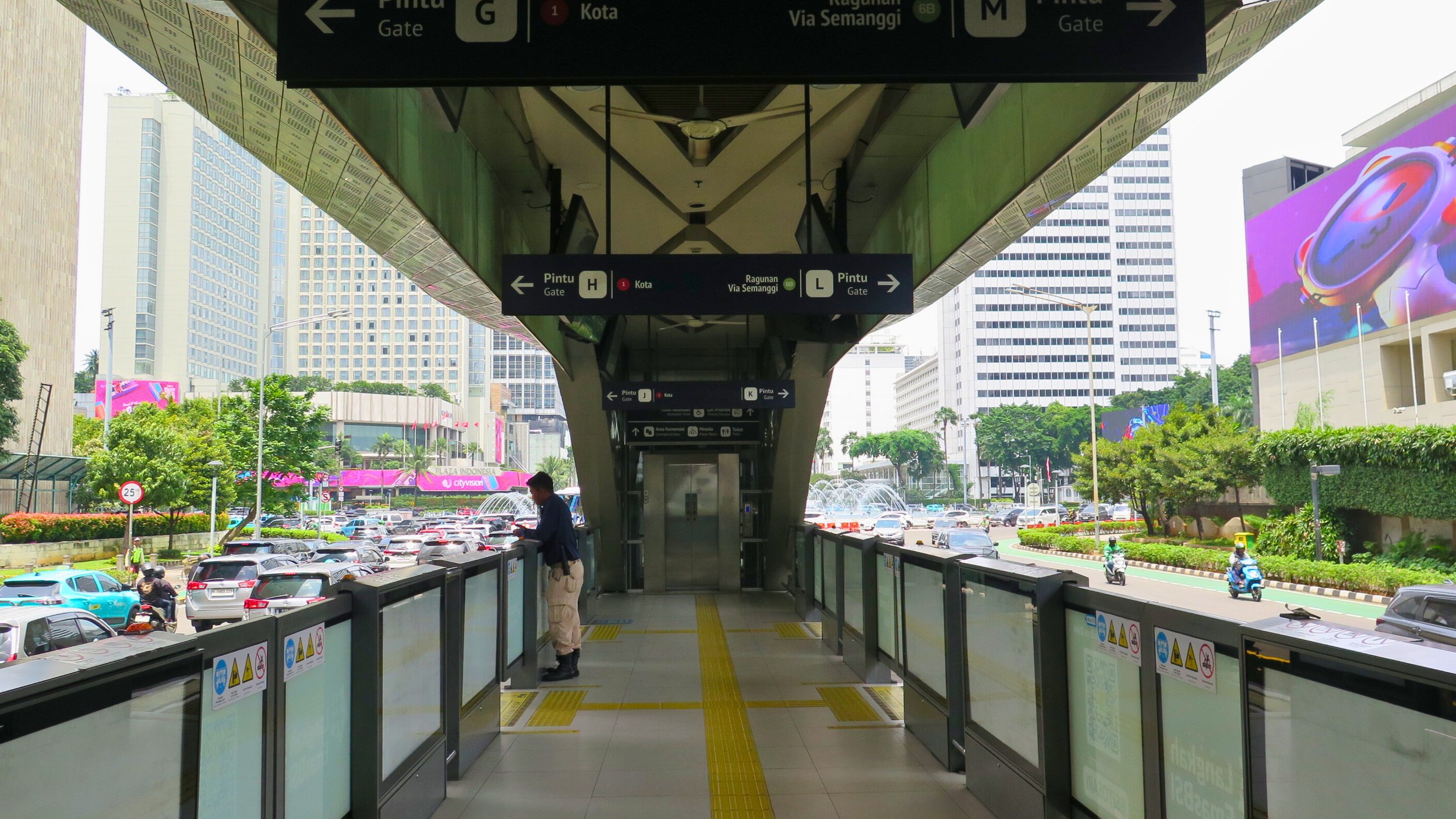
TransJakarta is an integrated bus system that you can use to travel around Jakarta. One of its main services is the BRT (Bus Rapid Transit), which currently operates 14 corridors, with more on the way. The BRT uses dedicated bus lanes that are closed to other vehicles. FYI, the BRT is more commonly known as the TransJakarta bus among local people.
To accommodate more passengers, TransJakarta also provides non-BRT services—such as Feeder Bus, MikroTrans, and RoyalTrans—which cover routes outside the main busways and act as feeders connecting you to the BRT corridors.
Pros: By entering your destination in Google Maps, you can instantly see recommended public transportation options, route choices, real-time bus schedules, and estimated arrival times. This makes it easier to choose the most convenient way to reach your destination.
Cons: Unfortunately, the so-called real-time schedules and estimated arrival times are not always reliable due to traffic conditions. You should anticipate a longer travel time than what is shown on Google Maps. If you’re short on time or don’t want to switch from one route to another, it’s better to consider other transport options, such as ride-hailing or taxis.
Fare: It is one of the cheapest public transportation option. The regular fare is only IDR 3,500 (less than 25 cents USD) per ride. You don’t have to pay extra if you switch lanes within the BRT corridors.
As for MikroTrans, the fare is free of charge, but you still have to tap in and out using e-money (electronic money) cards. The fare for RoyalTrans is more expensive—around IDR 20,000–35,000 (1,2-2,1 USD)—since the buses are more premium and cover longer routes to Jakarta’s suburbs.
Payment methods: The most common method is tapping in and out using an e-money cards. You can buy and top up these cards at ticket vending machines at BRT stops, convenience stores (Indomaret, Alfamart, Lawson, Family Mart, Circle K), local digital payment apps (GoPay, ShopeePay, OVO, DANA), and at the issuing banks or their mobile banking apps.
Jakarta MRT (Mass Rapid Transit)
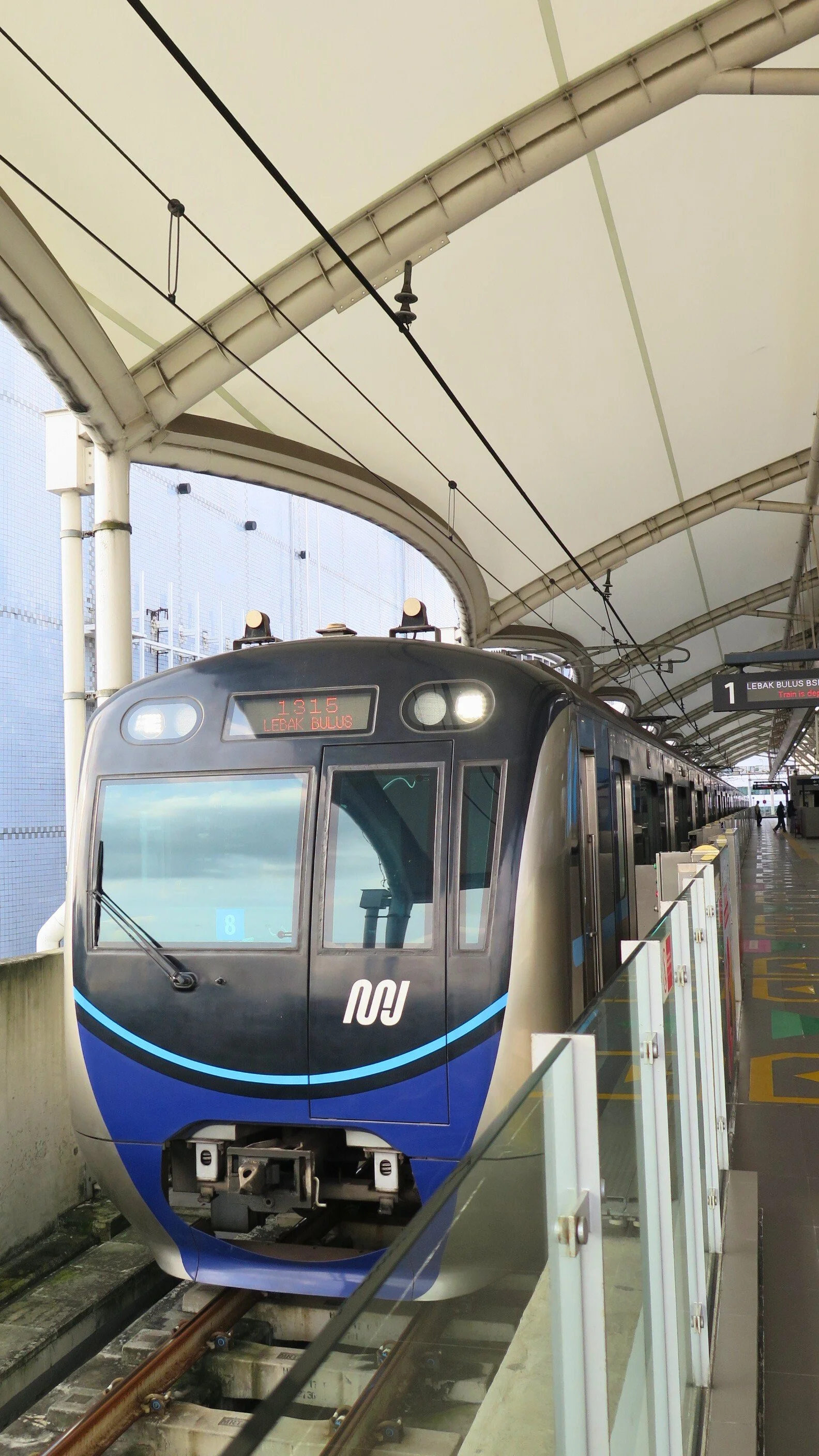
It’s similar to Bangkok BTS, New York subway, Paris metro, or London tube. For now, there is only one North–South line, running from the Lebak Bulus area (South Jakarta) to the Ancol area (North Jakarta). The line is not fully completed yet. The currently operating section is the southern route—from Lebak Bulus Station to Bundaran HI Station—with 13 stations. The northern section (from Bundaran HI to Ancol) is still under construction (per December 2025). If you are traveling from South Jakarta to the city center—or vice versa—this is the best option to help you avoid traffic.
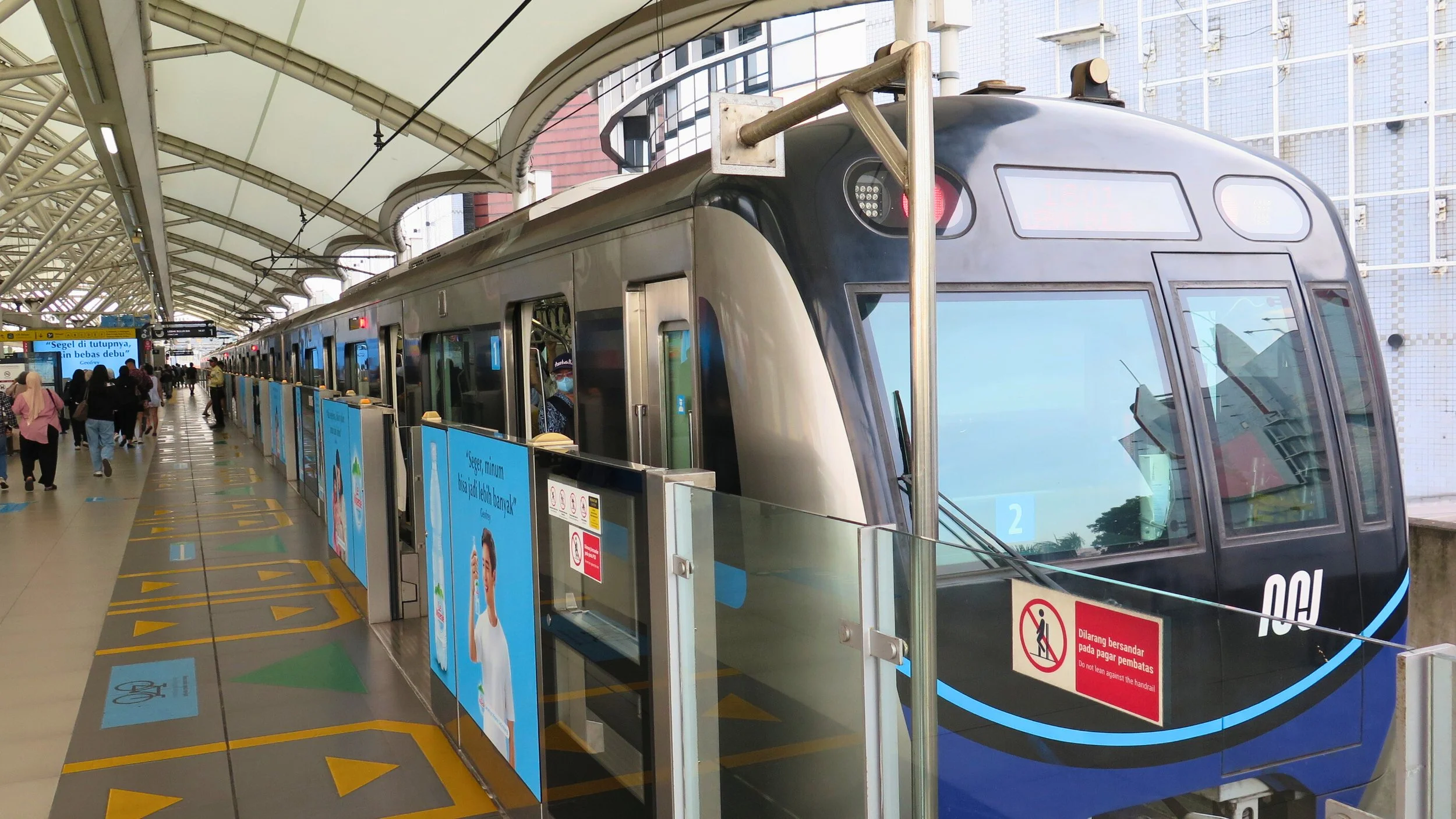
Photo credits: Zunainah
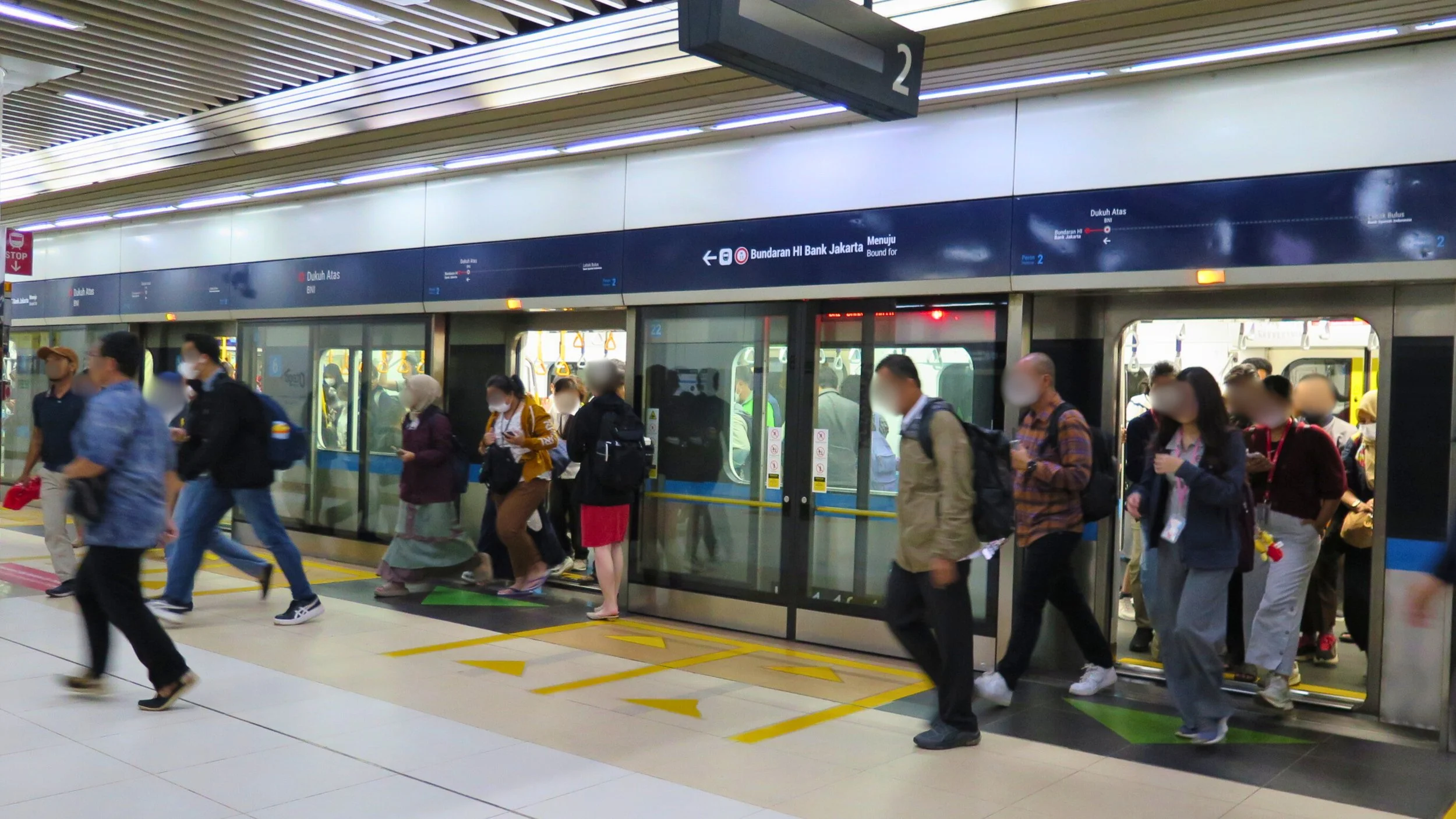
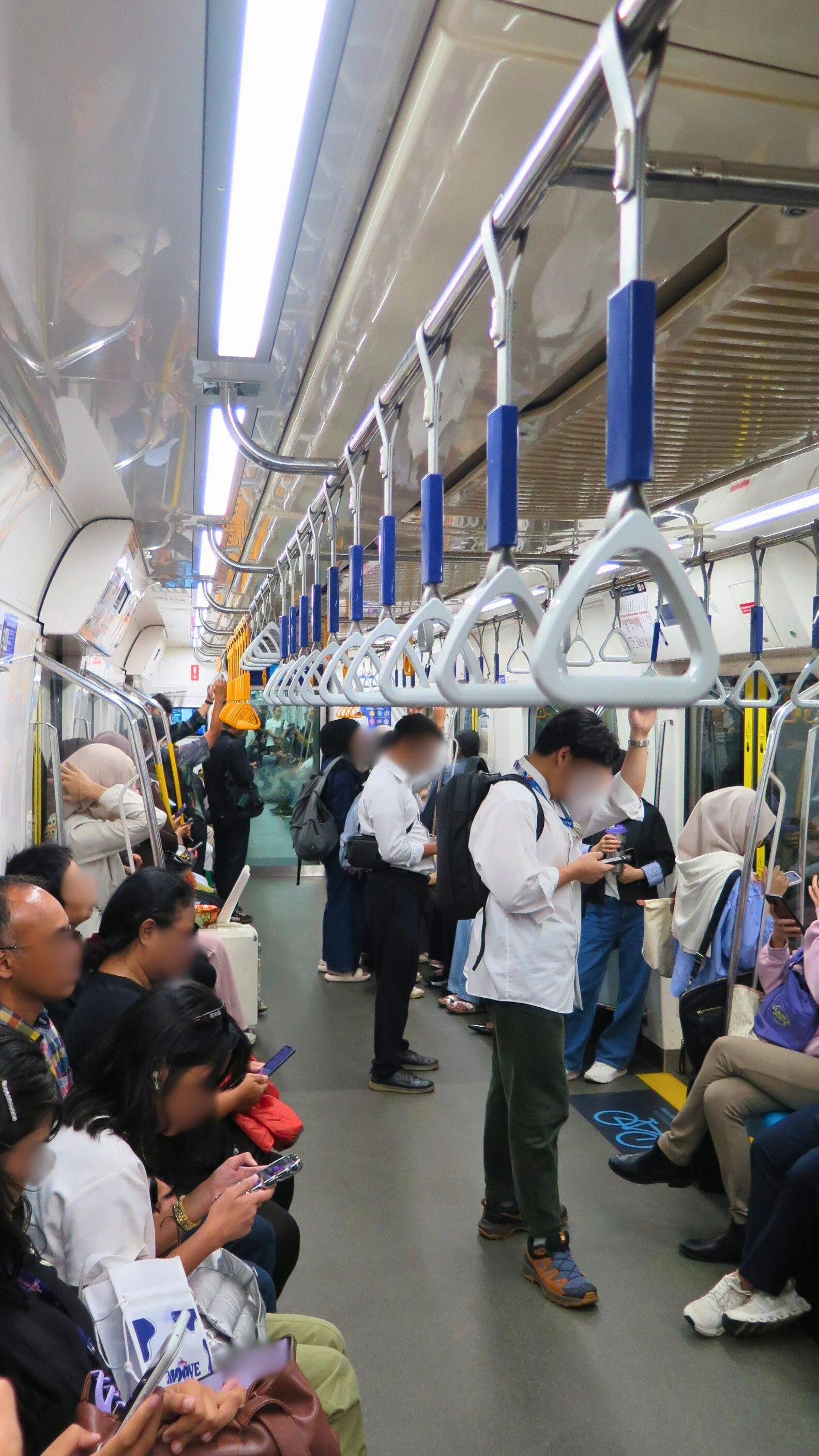
Pros: The MRT has the most reliable schedule compared to other public transportation. It’s clean and comfortable, and because it passes through Jakarta’s two main business districts—Sudirman and Thamrin—it has become a popular option for office workers. It can get very crowded during peak hours, but it’s still manageable.
If you have very limited time but still want to explore the city a bit, consider checking out the interesting spots—culinary, shopping, landmarks, and entertainment—along the MRT line.
Cons: The current MRT route is quite short, so you may need to transfer to another mode of transportation to reach other areas of Jakarta.
Fare: It is quite affordable, ranging from Rp 4,000–14,000 (24–84 cents USD), depending on the distance. The longer your ride, the higher the fare.
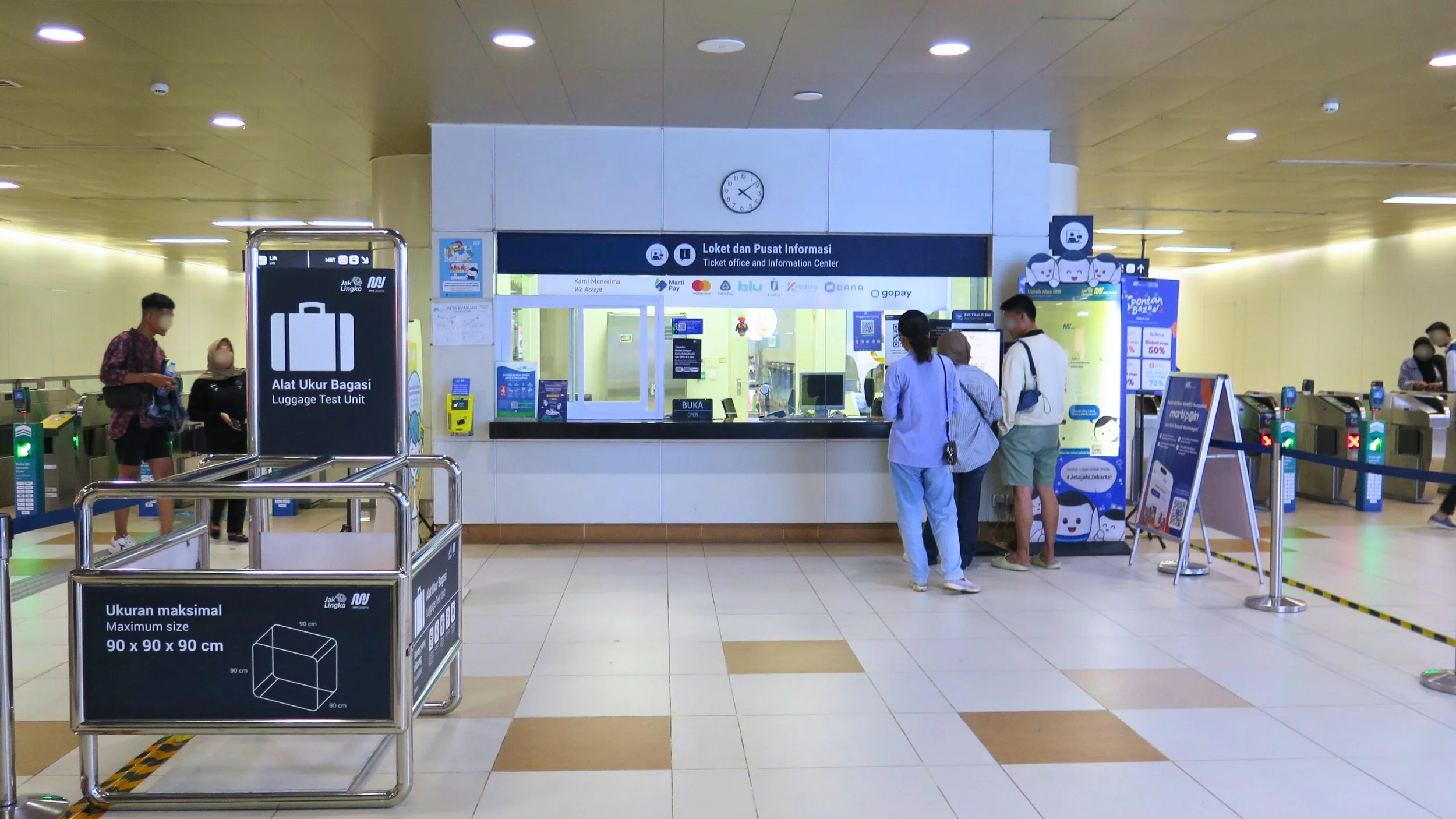
Payment methods: Like TransJakarta, the LRT, and the commuter line, it’s common to use an e-money for MRT. Alternatively, you can buy MRT single-trip or a multi-trip ticket at the vending machines or station ticket counters.
Jakarta LRT (Light Rapid Transit)
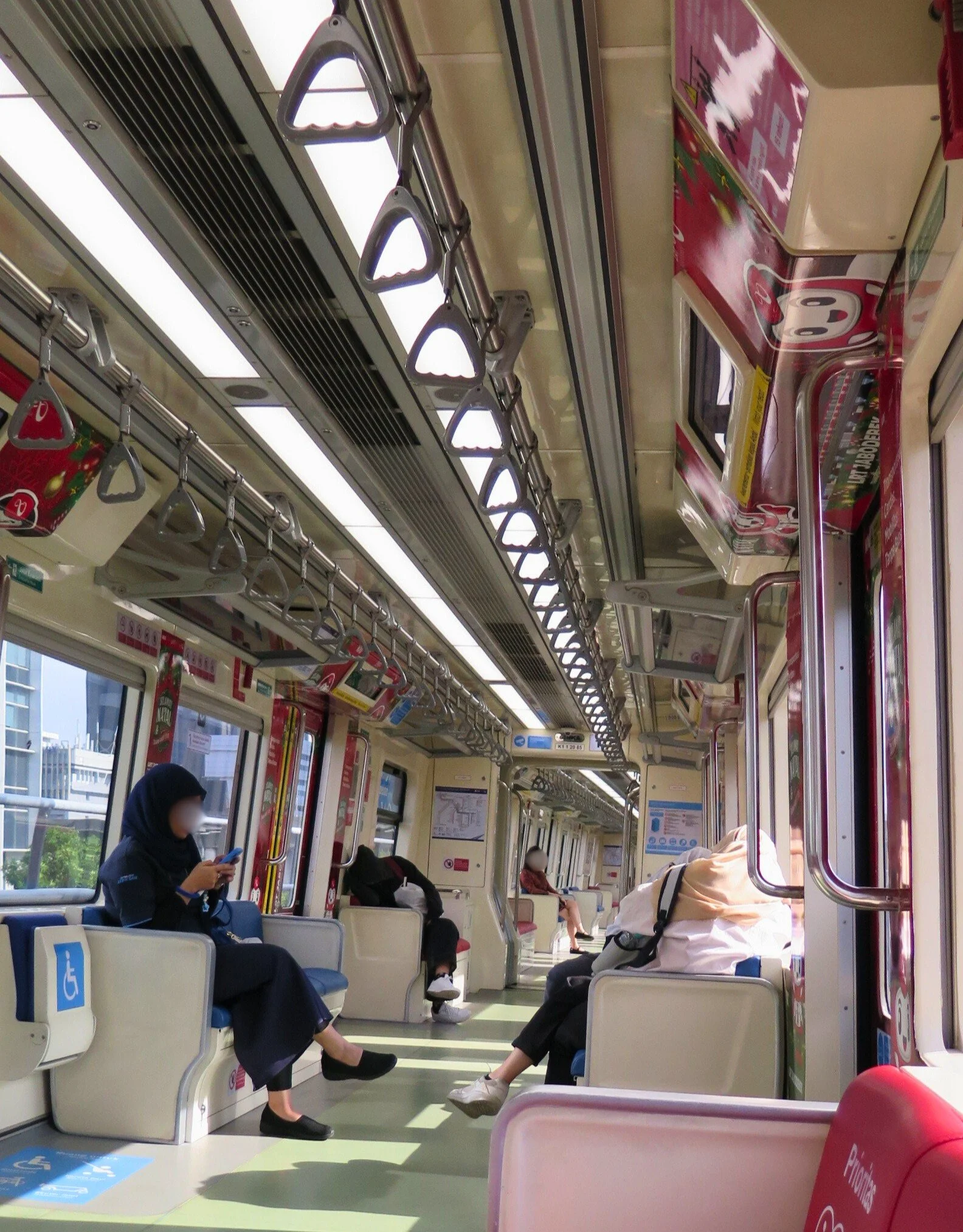
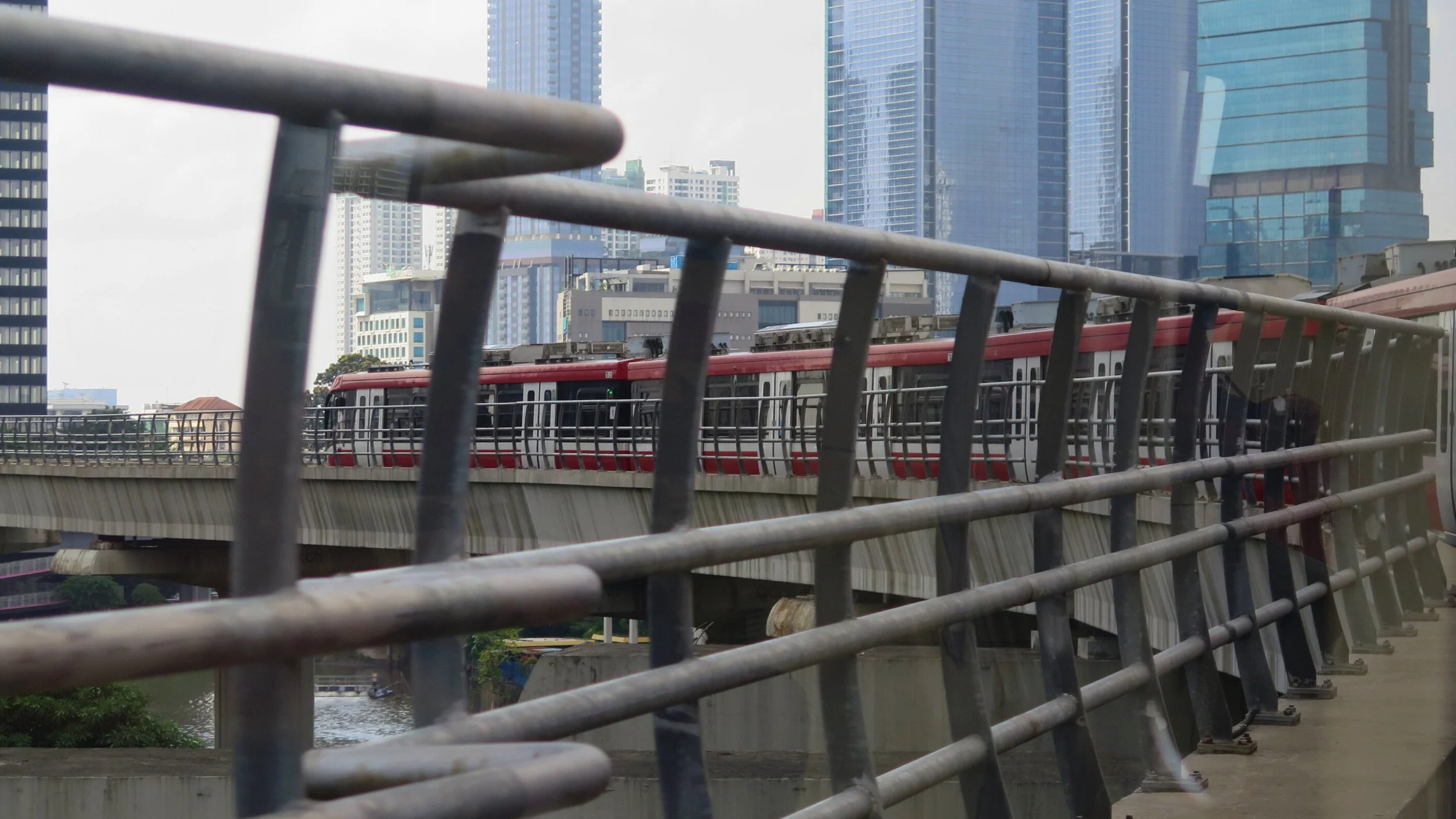
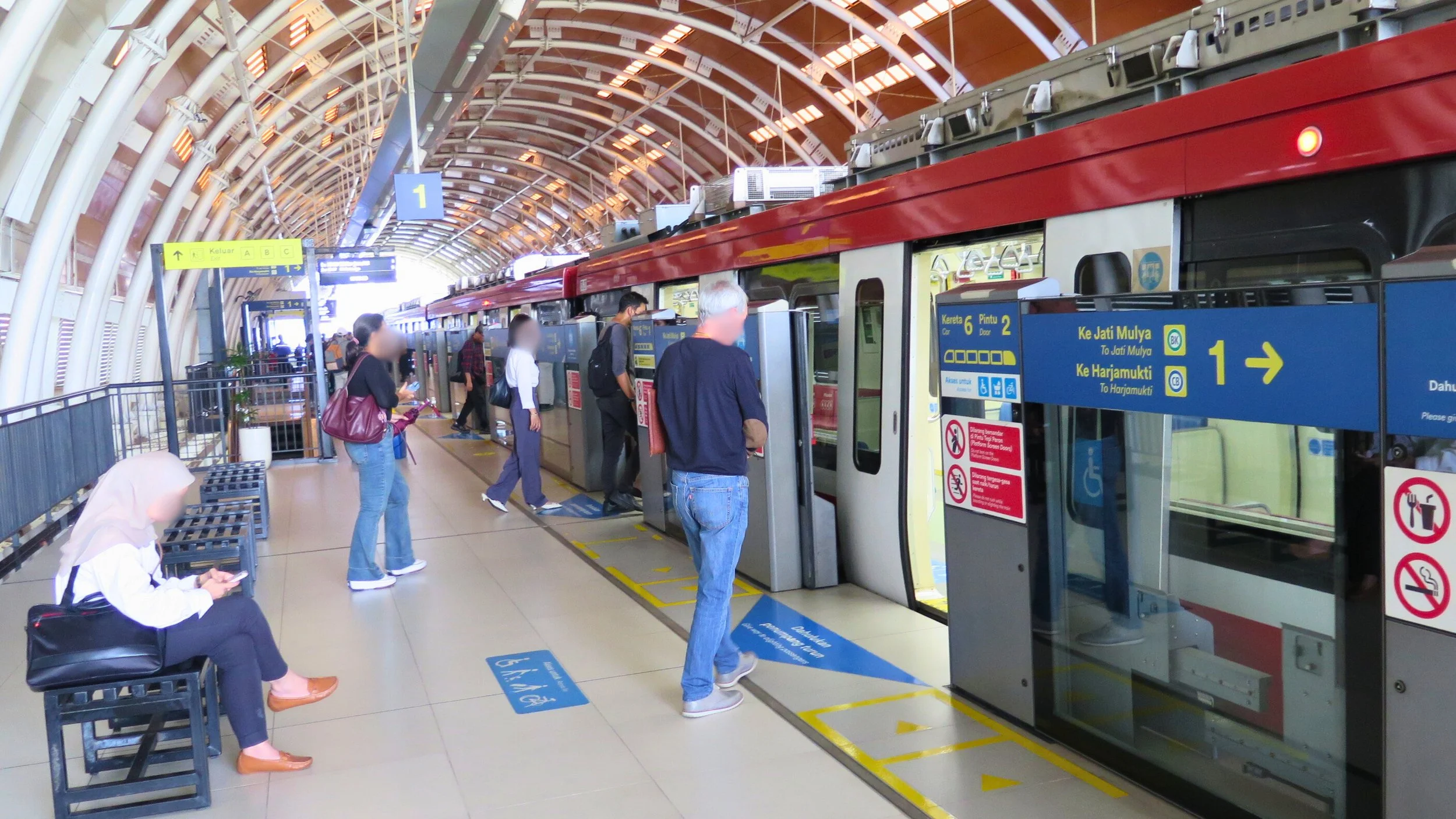
Compared to the MRT, the Jakarta LRT has lower capacity and slower speed, but it covers longer distances as it also serves satellite cities outside Jakarta. There are several lines operating: the Bekasi line, the Cibubur line, and the Jakarta/Kelapa Gading line.
The LRT has become a useful alternative for workers commuting from the suburbs of Bekasi or Cibubur. It has significantly reduced travel time—from 2 hours or more by car or bus to just 30–45 minutes with the LRT.

Photo credits: Zunainah
Pros: Aside from making it easier to travel to the outskirts of Jakarta, the LRT - Cibubur line also takes you to Taman Mini Indonesia Indah—one of the main attractions where you can learn about Indonesia’s diverse cultures and ethnic groups.
Cons: There have been several complaints about delays and longer wait times due to low service frequency and a limited number of train sets. However, these issues are being addressed, and ongoing improvements are underway to increase reliability, frequency, and capacity.
Fare: The minimum fare is Rp 5,000 (about 30 cents USD) for the shortest route, and Rp 25,000 (about $1.50 USD) for the longest route.
Payment methods: For the LRT, you can use an e-money. You can also buy tickets through the KAI (Kereta Api Indonesia - state-owned railway operator) app. Another option is to purchase KAI multi-trip or single-trip card at the vending machines or station ticket counters. The single-trip card is slightly more expensive than the regular fare because it includes a refundable deposit. You can return the card and get your deposit back.
Commuter Rail
Also known as the commuter line by locals, it is one of the most widely used services provided by KAI. The service operates not only in Jakarta, but also in Bandung, Yogyakarta, Surabaya, and their surrounding areas.
In Jakarta, the commuter line network is quite extensive, connecting the city with neighboring regions, such as Bogor, Depok, Tangerang, Bekasi. Thanks to its wide coverage, it has become one of the most popular transportation choices—especially during rush hours, when it can get super crowded.

Photo credits: Zunainah
Pros: The commuter line has a fixed timetable that you can check or download from its website or social media. However, the timetable is still an estimate, so minor delays of a few minutes are common. It’s not as punctual as Japan’s railway system, but it is generally reliable.
If any issues occur, officials usually provide updates on-site or through their social media channels, allowing you to consider alternative routes to reach your destination.
Cons: If you want a comfortable ride, avoid rush hours, as the trains can become extremely packed. Major transit stations like Manggarai and Tanah Abang can get very crowded—especially when there are unforeseen issues such as technical problems or heavy rain.
Fare: It may be the cheapest public transportation mode in Jakarta. The base fare is Rp 3,000 (18 cents USD) for the first 25 km, with an additional Rp 1,000 (6 cents USD) for every 10 km after that. Even for a long trip from Jakarta Kota Station to Bogor Station (a distance of 54 km and 1.5-hour ride), the fare is only Rp 6,000 (36 cents USD)—super affordable.
Payment methods: Since it’s also operated by KAI, the payment method for the commuter line is similar to LRT’s. The options are e-money cards, KAI multi-trip card, and single-trip card.
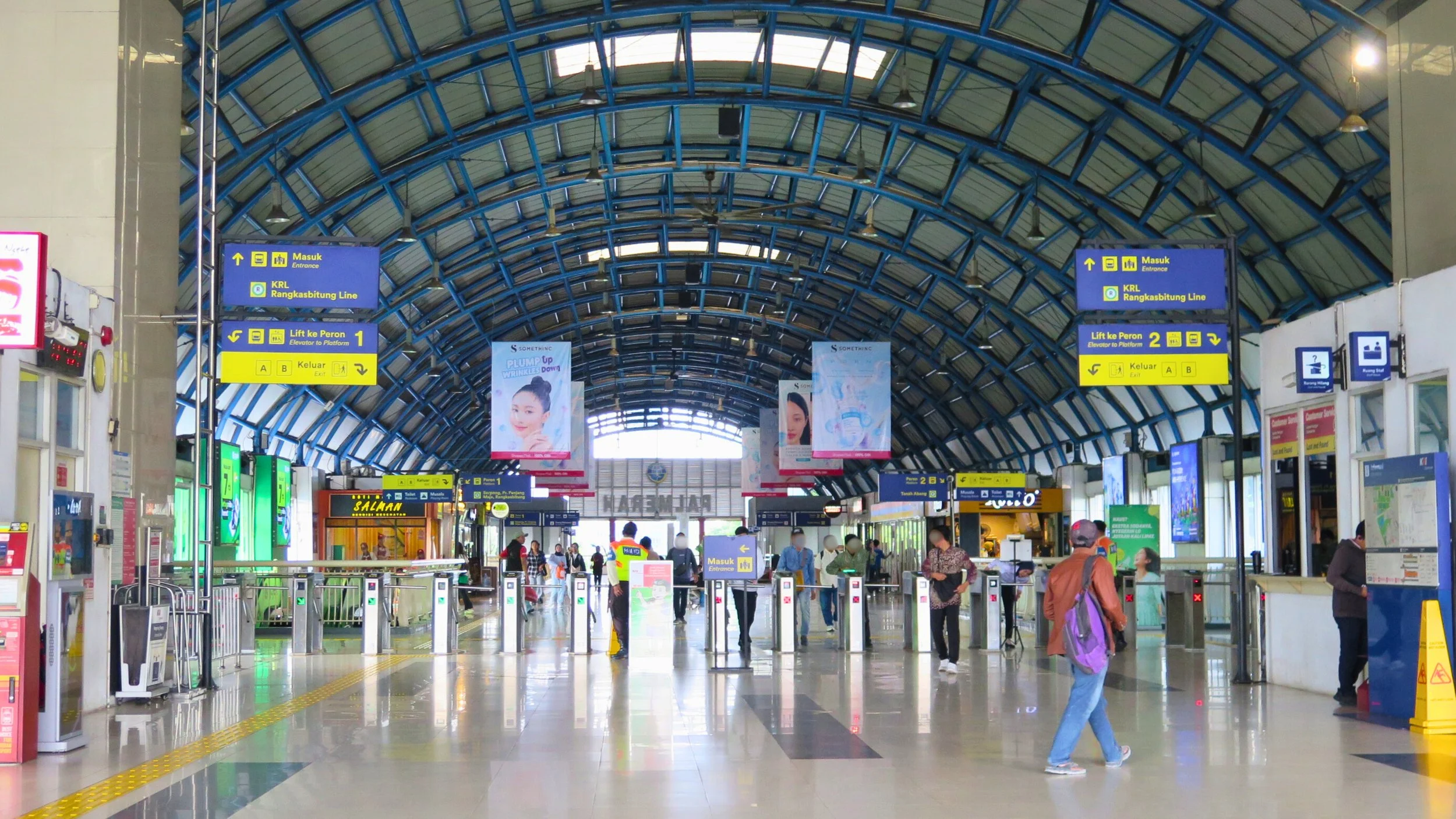
Photo credits: Zunainah
Cashless Payment, Please!
In Indonesia—especially in big cities like Jakarta—people tend to prefer cashless transactions, even at small street vendors. Besides debit and credit cards, it’s very common to use local digital payment options such as GoPay, ShopeePay, OVO, and DANA. But, in my opinion, these digital payments are more useful if you plan to stay in Indonesia for a longer period (more than a year). For a short stay, debit or credit cards should be enough to cover most of your payment needs.
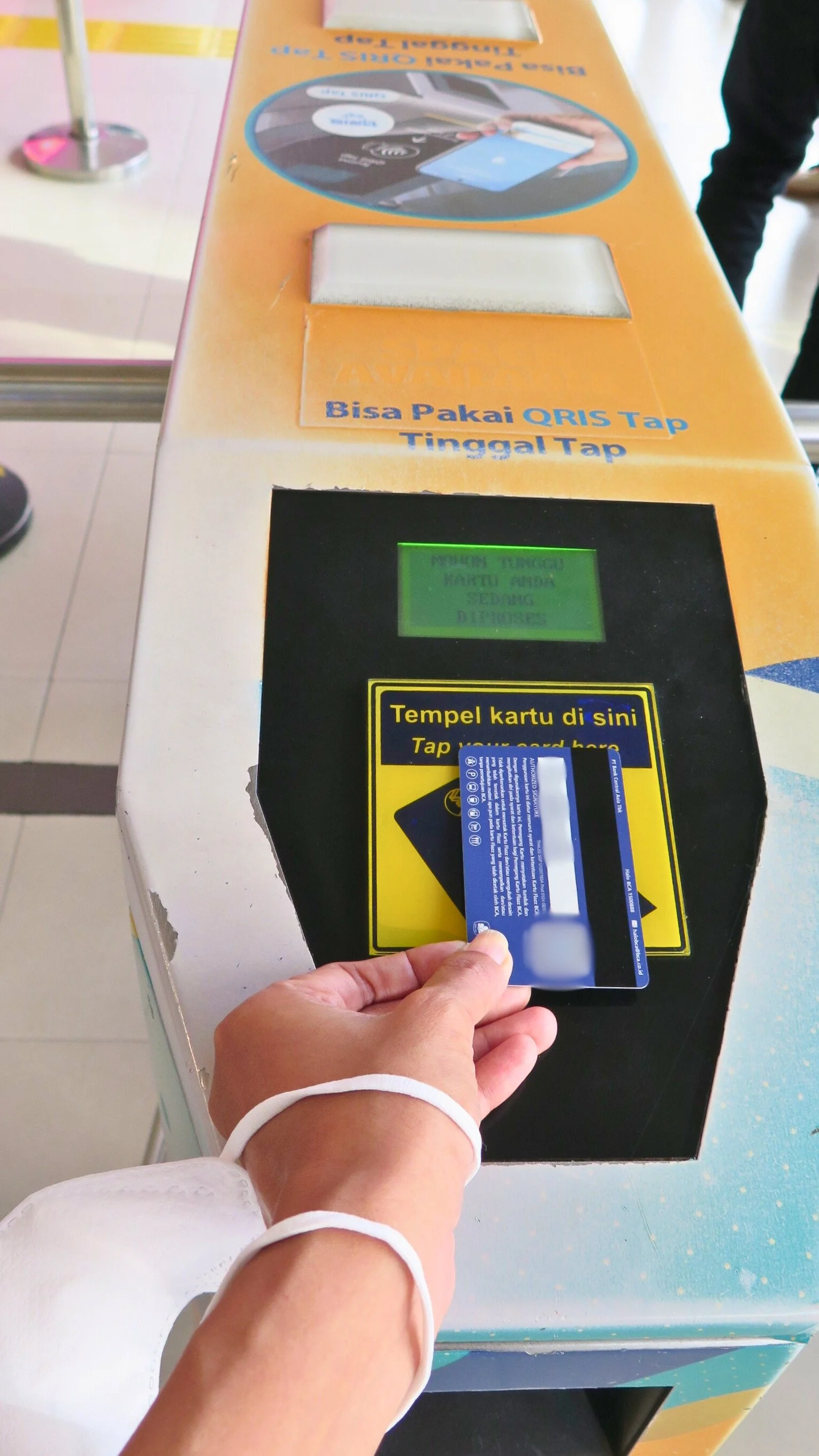
Photo credits: Zunainah
E-money (electronic money) cards are also widely used for public transportation (TransJakarta, commuter line trains, MRT, LRT), toll fees, convenience stores, parking, and even gas stations. There are many options available, including e-money cards issued by local banks (Mandiri e-money, BCA Flazz, BNI TapCash, and BRI BRIZZI), as well as JakLingko, the KAI Multi-Trip Card, and the MRT Multi-Trip Card. It’s recommended to keep one of these cards with you, as it makes getting around the city much easier.
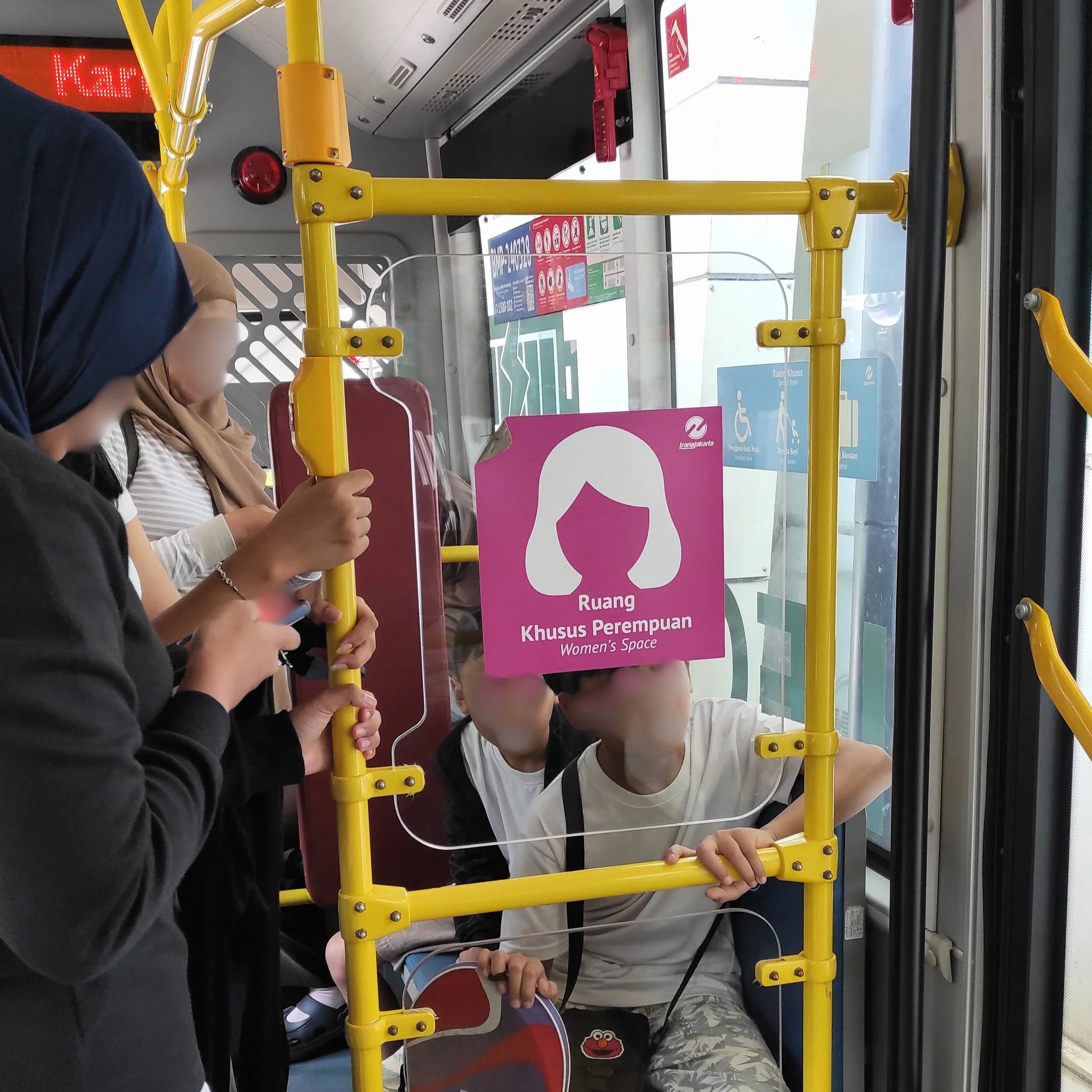
Photo credits: Zunainah
Women-only Section in Public Transportation
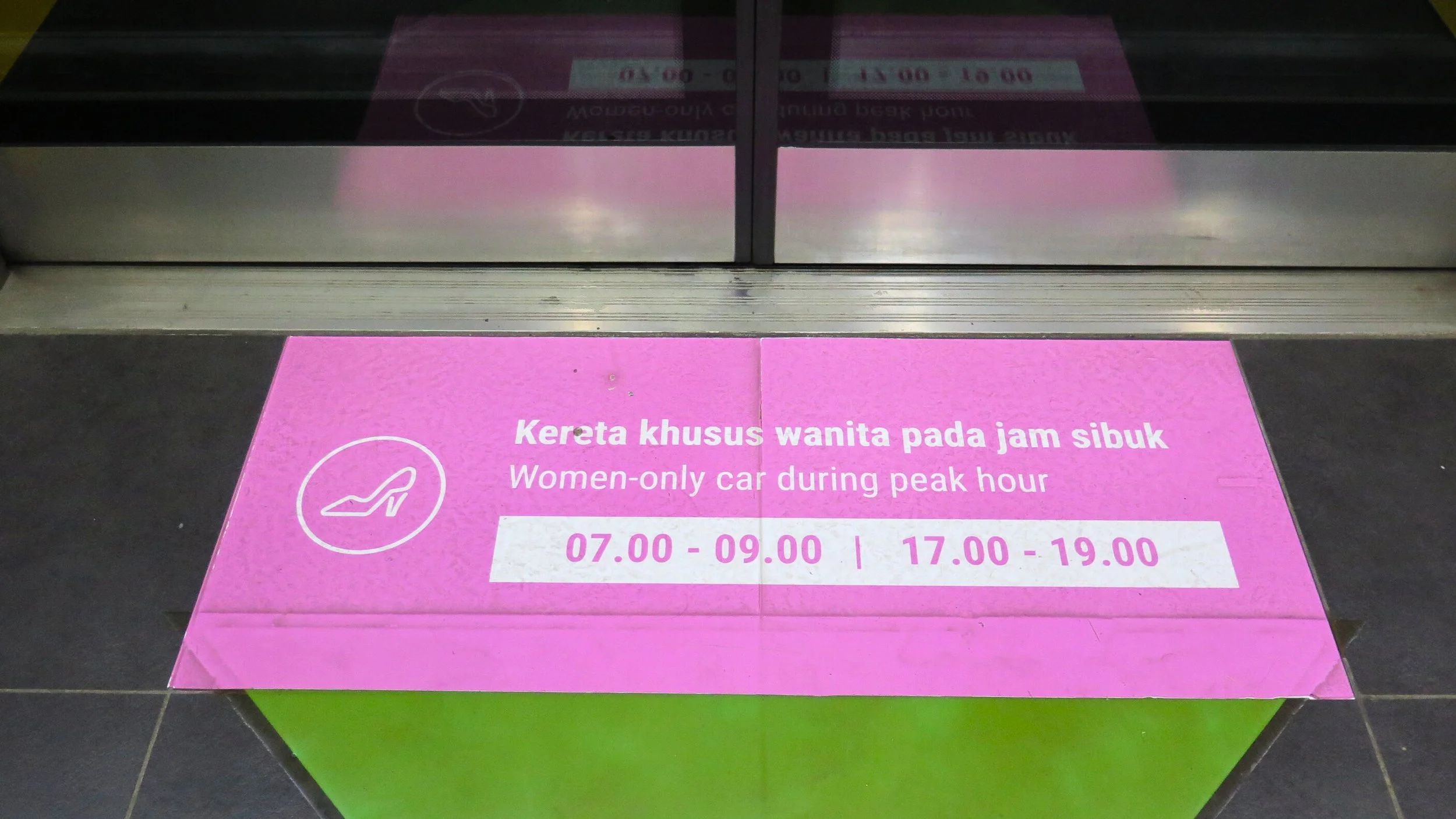
To provide greater comfort and safety for female passengers, most public transportation in Jakarta offers women-only sections. TransJakarta, the MRT, LRT, and commuter trains all have exclusive carriages or designated sections for women, especially during rush hours. These are usually located at the front of the carriage. If you’re unsure where to board, it’s best to ask the officers on duty before getting on.
If you’re a woman traveler and looking for a more authentic travel experience, discovering the real hidden gems that only locals know and exploring places beyond the usual tourist spots, Greether could offer you that. Traveling alongside fellow women, Greether promotes safe travel for women while giving you the opportunity to explore the city with companions who truly live there and understand the local culture and way of life.
It’s not just a trip, it’s a chance to connect, explore, and make your journey truly unforgettable.
📌Disclaimers:
All IDR-to-USD exchange rates mentioned are estimates only. Please check the current exchange rate for more accurate numbers.
Want to book a Greeter for your next solo trip?
Click here
You can also book Zunainah as your Greeter in Jakarta, Indonesia!
To connect with us: info@greether.com or dm us at @greet.her